Porsche slant nose: the Flachbau 930, its generations and production numbers
- Filed by
- PorschePrototype.com Editors
- Filed
- Sources checked
- 4 listed below

This record covers
- What a Porsche slant nose is and where it came from
- The three generations of factory 930 slant nose
- Option codes M505 and M506
- The 964 Turbo S Flachbau and what drives value
Short answerA Porsche slant nose, or Flachbau, is a 911 with its round wing-mounted headlights replaced by a low, flat front inspired by the 935 race car. Porsche built 948 slant-nose 930 Turbos from 1981 to 1989: 58 first-generation cars, 204 second-generation cars with pop-up headlights, and 686 third-generation cars sold as options M505 (US, 630 cars) and M506 (rest of world, 56 cars). In 1993–94 Porsche Exclusive built 76 964 Turbo S Flachbau cars. Aftermarket conversions far outnumber factory cars.
- Factory 930 slant noses
- 948documented
- M505 (US) / M506 (RoW)
- 630 / 56documented
- 964 Turbo S Flachbau
- 76documented
- Conversions in circulation
- Many more than factory carsclaimed
The slant nose is the most recognisable special 911 of the 1980s, and the most imitated. It is also the body style of the yellow car in the $21 million “911 T prototype” listing. Knowing the factory numbers is the first defence against a good story.
What is a Porsche slant nose?
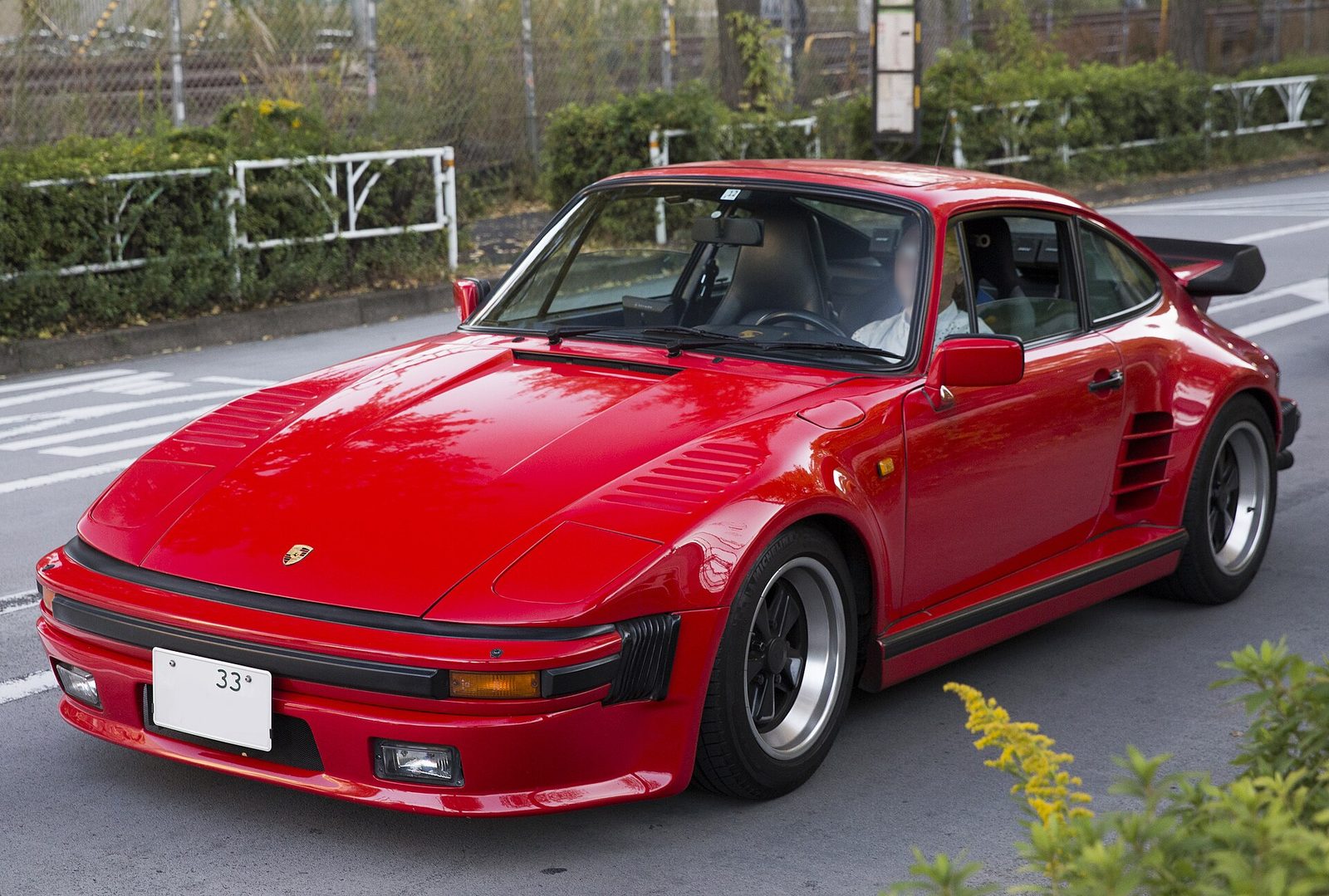
A Porsche slant nose is a 911 with a flat, low front end in place of the upright front wings and round headlights. The German name is Flachbau, “flat construction”. Other names include flat nose and slope nose. On factory cars the front wings are reshaped, the headlights move into the front or become pop-ups, and later cars add louvres and side sills.
Where did the slant nose come from?
The slant nose came from racing. Under Group 5 rules in 1976, engineer Norbert Singer found that the 935’s front wings could be reshaped, and the low-nose 935 was born. Customers wanted the look on road cars, and Porsche’s Sonderwunsch (special wishes) department began building slant-nose 930 Turbos on request around 1981.
How many factory slant noses were built?
| Generation | Years | Headlights | Built | Record |
|---|---|---|---|---|
| First | 1981–1983 | Integrated in the front apron | 58 | Sonderwunsch orders |
| Second | 1983–1987 | Pop-up, 924/944 style | 204 | Sonderwunsch orders; conversion cost over 38,000 DM |
| Third, M505 | 1987–1989 | Pop-up | 630 | US-market option |
| Third, M506 | 1987–1989 | Pop-up | 56 | Rest-of-world option |
| Total 930 | 1981–1989 | 948 |
The two third-generation codes differ in the oil cooler: M506 kept a central oil cooler in the front apron, which some US states did not allow, so M505 cars moved it elsewhere.
What was the 964 Turbo S Flachbau?
The 964 Turbo S Flachbau was a 1993–94 run built by Porsche Exclusive from the last 93 964 Turbo chassis. Seventy-six received the flat nose and 17 were built without it. They were produced as X83 for Japan, X84 for the rest of the world and X85 for the US, where 39 were delivered, and used the X88 power upgrade to 380 hp.
What drives a slant nose Porsche’s value?
A slant nose Porsche’s value is driven first by whether it is a factory car, then by documentation, originality and condition. Factory M505 and M506 cars carry the code on their build record; earlier Sonderwunsch cars need invoices and physical evidence. The step-by-step checks are in factory slant nose versus conversion.
Is the slant nose coming back?
Porsche built one modern slant nose in 2026, the Flachbau RS, a Sonderwunsch one-off on a 911 GT2 RS. Porsche calls it a one-off.
Frequently asked questions
What is a slant nose Porsche?
A slant nose Porsche is a 911, usually a 930 Turbo, with a flat front end instead of the upright wings and round headlights. Porsche called it Flachbau. Factory cars were built from 1981 to 1989, inspired by the 935 race car.
How many slant nose Porsches were made?
Porsche built 948 slant-nose 930 Turbos between 1981 and 1989, plus 76 964 Turbo S Flachbau cars in 1993–94. Many more 911s have been converted by aftermarket shops.
How much is a slant nose Porsche worth?
Value depends first on whether the car is a documented factory slant nose or a conversion. Factory M505 and M506 cars with records command strong premiums over standard 930 Turbos, while conversions usually sell at or below the value of the car they were built from.
Are slant nose Porsches rare?
Factory slant noses are rare: 948 930s against tens of thousands of 911s of the period. Slant-nose styling itself is common, because conversion kits were widely fitted.