Porsche engine numbers: decoding classic 911 engine types and serials
- Filed by
- PorschePrototype.com Editors
- Filed
- Sources checked
- 4 listed below

This record covers
- Where the engine number is stamped on a classic 911
- Engine serial numbers versus engine type numbers
- A table of classic 911 engine types
- How to check matching numbers
Short answerA classic Porsche 911 engine carries two identifiers. The engine serial number is stamped on the crankcase on the vertical support for the fan housing on the cylinder 4-5-6 side. From the 1970s it has seven digits beginning with 6, with the third digit giving the model year. The engine type number, such as 901/01, 911/57 or 930/20, identifies the specification. Matching numbers means both agree with the car’s factory record.
- Serial location
- Fan housing support, cylinders 4-5-6 sidedocumented
- 1970s serial format
- 7 digits, starts with 6documented
- 2.4 911T Euro engine type
- 911/57documented
- Year digit rule on every early engine
- Varies by eraunknown
The engine is the most frequently replaced major part of a classic 911, and the one sellers most want to call original. Two numbers answer the question, and they are often confused.
Where is the engine number on a classic Porsche 911?
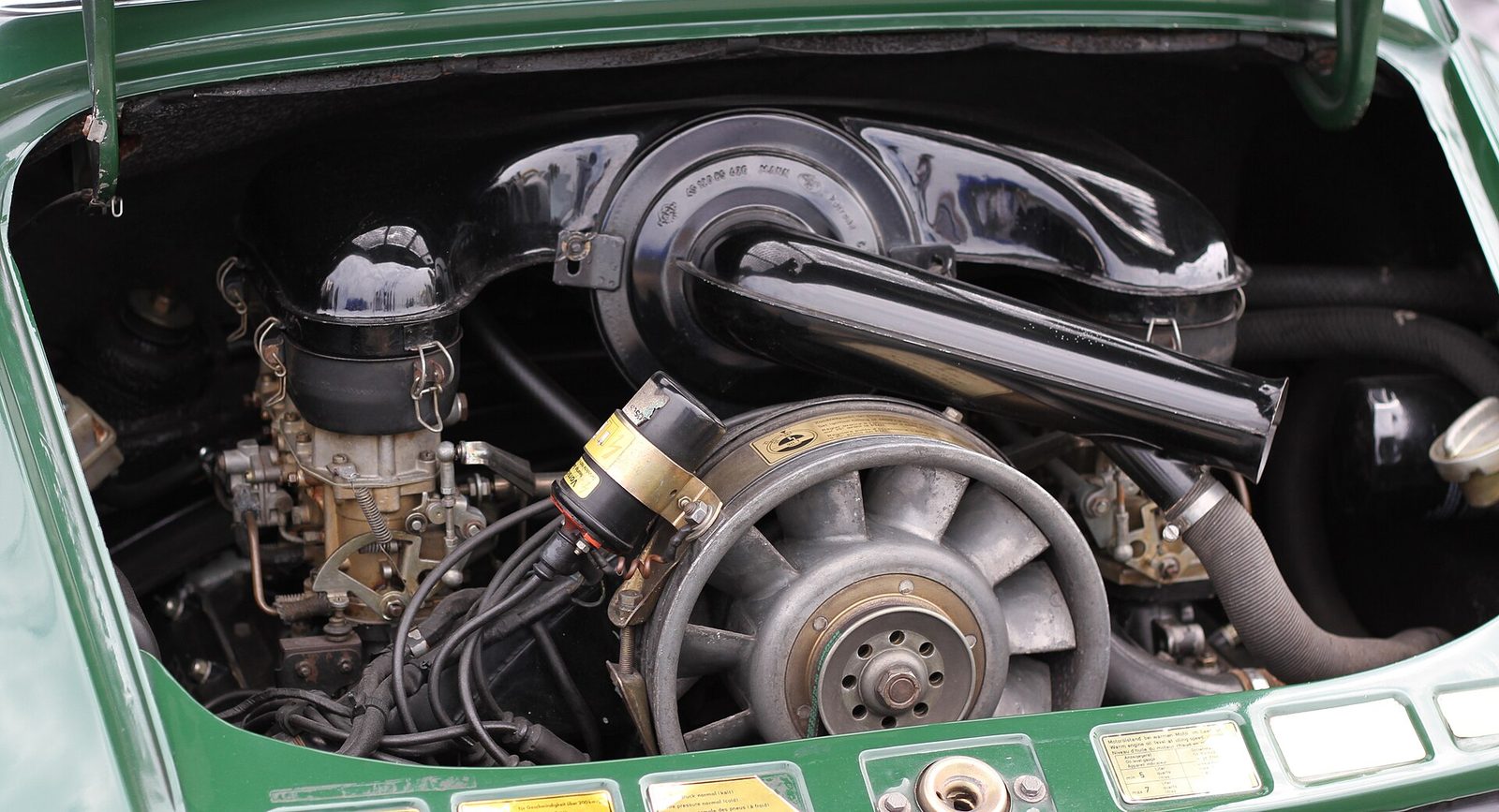
The engine number on a classic 911 is stamped on the crankcase, on the vertical part of the fan housing support on the side of cylinders 4, 5 and 6. With the engine lid open it sits just below the cooling fan housing. Dirt, paint and later repairs can hide it, so clean the area carefully before reading it.
What is the difference between an engine serial number and an engine type number?
The engine serial number identifies one individual engine; the engine type number identifies its specification. Both appear on the factory record.
- Serial number: the unique number stamped on the case. Early 911s used six-digit numbers in a 900xxx range; a 1965 911 coupé sold by Bonhams, chassis 300339, carries engine 900436. By the 1970s serials had seven digits starting with 6.
- Type number: a code such as 901/01 or 911/57 that tells you displacement, fuel system and market version.
How do seven-digit engine serials work?
Seven-digit engine serials work as the Porsche Club of America describes them: the first digit is 6, the third digit is the last digit of the manufacturing year, and the final four digits are the individual engine’s serial. Porsche changed engine numbering several times between 1965 and 1989, so treat any rule as era-specific and confirm against the factory record.
Classic Porsche 911 engine type numbers
| Type | Displacement | Fuel system | Years | Application |
|---|---|---|---|---|
| 901/01 | 2.0 | Solex carburettors | 1965–66 | First 911 |
| 901/02 | 2.0 | Weber carburettors | 1967–68 | 911S |
| 901/03 | 2.0 | Weber carburettors | 1968–69 | 911T, Europe |
| 901/05 | 2.0 | Weber carburettors | 1966–67 | 911 |
| 901/09 | 2.0 | Mechanical injection | 1969 | 911E |
| 901/10 | 2.0 | Mechanical injection | 1969 | 911S |
| 911/01 | 2.2 | Mechanical injection | 1970–71 | 911E |
| 911/02 | 2.2 | Mechanical injection | 1970–71 | 911S |
| 911/03 | 2.2 | Zenith carburettors | 1970–71 | 911T, Europe |
| 911/07 | 2.2 | Zenith carburettors | 1970–71 | 911T, US |
| 911/51 | 2.4 | Mechanical injection | 1972–73 | 911T, US |
| 911/52 | 2.4 | Mechanical injection | 1972–73 | 911E |
| 911/53 | 2.4 | Mechanical injection | 1972–73 | 911S |
| 911/57 | 2.4 | Zenith carburettors | 1972 | 911T, Europe |
| 911/83 | 2.7 | Mechanical injection | 1973–75 | Carrera RS |
| 911/91 | 2.4 | K-Jetronic | 1973 | 911T, US |
| 930/02 | 3.0 | K-Jetronic | 1976–77 | Carrera 3.0 |
| 930/03 | 3.0 | K-Jetronic | 1978–79 | 911SC, rest of world |
| 930/20 | 3.2 | Motronic | 1984–87 | Carrera 3.2, Europe |
| 930/50 | 3.0 | K-Jetronic | 1975–76 | Turbo, rest of world |
| 930/60 | 3.3 | K-Jetronic | 1978–82 | Turbo, rest of world |
| 930/66 | 3.3 | K-Jetronic | 1983–87 | Turbo, rest of world |
Sportomatic, US and Japanese versions carried their own type numbers. Note that 930 appears both as the 911 Turbo’s model type and as the engine family for 3.0 and 3.2 naturally aspirated engines.
How do you check matching numbers on a Porsche?
You check matching numbers by comparing the engine and gearbox actually fitted with the numbers recorded for the chassis.
- Find the chassis number with the Porsche VIN location guide and decode it on the Porsche VIN decoder.
- Read the engine serial and engine type on the crankcase.
- Read the gearbox number and type, explained in the 901 transmission guide.
- Compare all three with the factory record. The Porsche Classic Technical Certificate records engine and transmission numbers and checks them against original data; the Production Specification does not. See the Certificate of Authenticity guide.
A correct type number with the wrong serial means a period-correct replacement engine, not the original. That matters for value, and for any claim about a car’s history, such as the 911T models often upgraded with later engines.
Frequently asked questions
Where is the engine number on a classic Porsche 911?
The engine serial number is stamped on the crankcase, on the vertical portion of the fan housing support on the side of cylinders 4, 5 and 6, visible from above with the engine lid open.
What does a Porsche 911 engine number tell you?
The serial number identifies the individual engine and, in the seven-digit 1970s format, its model year. The separate engine type number identifies displacement and specification, such as a 2.4-litre European 911T (911/57).
Can I look up a Porsche engine number online?
Online tables can place an engine number in a range, but only the car’s factory record shows whether that engine was originally fitted to that chassis. A Porsche Classic Technical Certificate checks this.
What does matching numbers mean on a Porsche?
Matching numbers means the engine and gearbox fitted today carry the same serial and type numbers recorded for that chassis when it left the factory.