Porsche Type 754 T7: the 1959 prototype that shaped the 911
- Filed by
- PorschePrototype.com Editors
- Filed
- Sources checked
- 3 listed below
_1X7A0333.jpg)
This record covers
- What the Type 754 T7 was
- How it differed from the 911
- Butzi Porsche’s role and the rival T6
- Where the T7 prototype is today
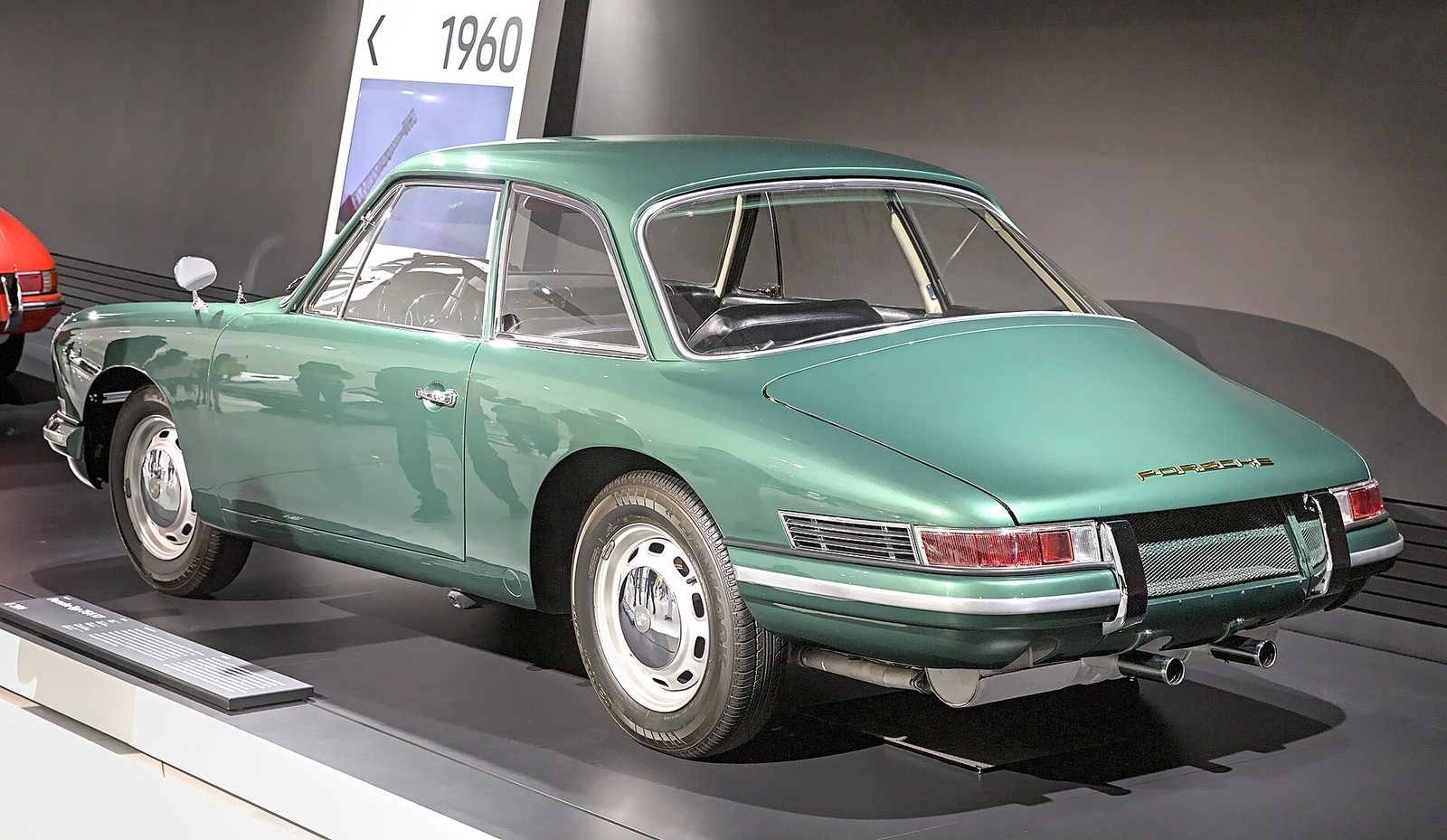
Short answerThe Porsche Type 754 T7 was a 1959–1960 body study for the successor to the 356, designed under Ferdinand Alexander “Butzi” Porsche. It was a four-seat coupé on a 2,400 mm wheelbase and already showed the 911’s flat bonnet, raised wings, sloping headlights and fastback roof. Ferry Porsche wanted a sportier 2+2, so the wheelbase was cut to about 2,200 mm for the 901. The T7 survives in the Porsche Museum.
- Type number
- 754documented
- Year
- 1959–1960documented
- Wheelbase
- 2,400 mmdocumented
- Location today
- Porsche Museum, Stuttgartdocumented
Before there were 901 prototypes with chassis numbers, there was a body study with a type number. The Type 754 T7 is where the 911’s silhouette appears for the first time, on a car that was never meant to be a 911 at all.
What was the Porsche Type 754 T7?
The Porsche Type 754 T7 was a full-size body study for the car that would replace the 356. Porsche wanted more interior space, more luggage room and, at first, four proper seats. Ferdinand Alexander “Butzi” Porsche, Ferry Porsche’s eldest son, produced the design. His first 1:7.5 plasticine model was finished on 9 October 1959, two months before his 24th birthday.
The finished T7 was built on a lengthened 356 base with a 2,400 mm wheelbase. It already had the flattened bonnet between raised front wings, the inclined headlights, the windscreen and A-pillars, and the long fastback rear that define the 911.
How is the T7 different from the 911?
The T7 differs from the 911 mainly in length and seating. It was a genuine four-seater with a notchback-style rear window treatment, while Ferry Porsche decided the new car should be a sportier 2+2.
| Type 754 T7 (1959) | Porsche 901 / 911 (1963–64) | |
|---|---|---|
| Seating | Four | Two plus two |
| Wheelbase | 2,400 mm | 2,211 mm |
| Engine | 356-derived four-cylinder | Type 901 flat-six |
| Status | Body study | Production car |
Who else worked on the 356’s successor?
Erwin Komenda, the long-serving head of Porsche’s body department and designer of the 356, led a separate body project known as the T6. Butzi Porsche complained that Komenda altered his proposals, and Ferry Porsche had the 901 prototype body built by Reutter rather than in Komenda’s department. That tension is the root of the later dispute examined in who designed the Porsche 911.
Where is the Porsche T7 today?
The Type 754 T7 survives and is displayed by the Porsche Museum in Stuttgart. It is one of the few pre-901 design studies still in the factory collection, and model makers have reproduced it in miniature.
What came after the T7?
After the T7 came the 901 project and its thirteen pre-production cars, beginning with chassis 13321 “Sturmvogel” in 1962. Their numbers, names and fates are on the 901 prototype chassis list, and the production story continues on the Porsche 901 page.
Frequently asked questions
What is the Porsche T7?
The Porsche T7 is the Type 754 body study of 1959, a four-seat coupé designed under Butzi Porsche. It is the direct styling ancestor of the Porsche 901 and 911.
Is the Porsche Type 754 T7 the first 911?
No. It is a body study that preceded the 901 project. The 911 used a shorter wheelbase, two plus two seating and a new flat-six, but the T7 already shows the 911’s roofline and front.
Where can I see the Porsche T7?
The Type 754 T7 prototype is part of the Porsche Museum collection in Stuttgart-Zuffenhausen.