Porsche 356 No. 1: the first car to carry the Porsche name
- Filed by
- PorschePrototype.com Editors
- Filed
- Sources checked
- 3 listed below
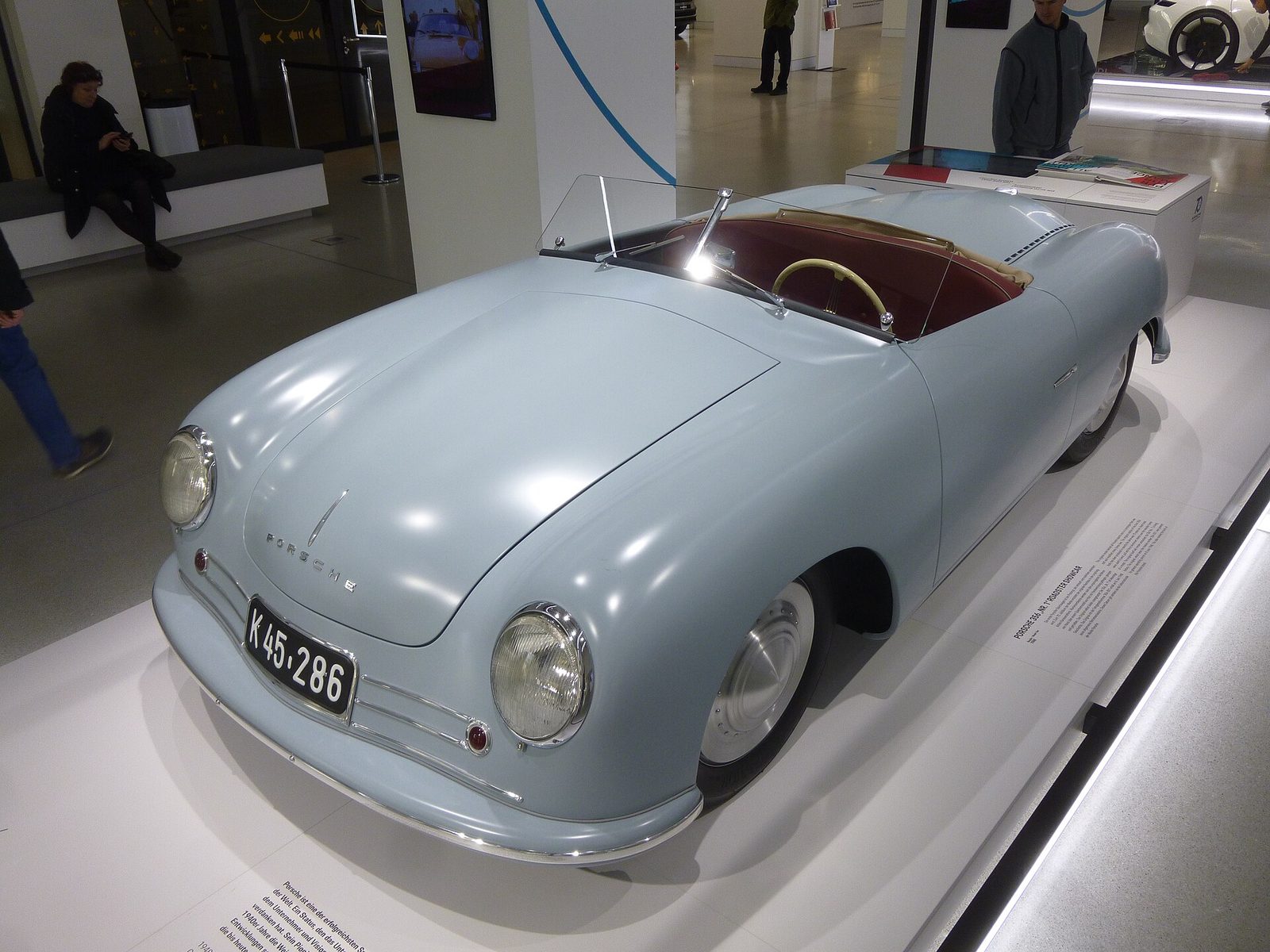

This record covers
- What the Porsche 356/1 was
- Its registration, engine and body
- Who designed and built it
- How it differs from production 356s
Short answerThe Porsche 356/1, known as 356-001 or “No. 1”, was the first car built and registered under the Porsche name. It was a two-seat aluminium roadster with a mid-mounted 1,131 cc Volkswagen-based flat-four producing 40 hp, registered in Carinthia as K 45-286 and first driven on 8 June 1948. Erwin Komenda designed the body and Friedrich Weber hand-built it in Gmünd, Austria. Production 356s moved the engine behind the rear axle.
- Registered
- 8 June 1948, K 45-286documented
- Engine
- 1,131 cc flat-four, mid-mounteddocumented
- Body design
- Erwin Komendadocumented
- Built in
- Gmünd, Carinthia, Austriadocumented
The 356/1 is Porsche’s birth certificate on wheels. It was built while Ferdinand Porsche was still held in France and his son Ferry was running the company from a former sawmill in Austria.
What was the Porsche 356/1?
The Porsche 356/1 was the prototype for Porsche’s first production car: a small, light two-seat roadster built in 1948 in Gmünd, Carinthia. It was registered by the state of Carinthia with the plate K 45-286 and made its first official drive on 8 June 1948.
It carried project number 356, which became the name of Porsche’s first series car.
Porsche 356/1 specifications
| Item | Porsche 356/1 (1948) |
|---|---|
| Body | Two-seat open roadster, hand-formed aluminium |
| Engine | Air-cooled flat-four, Volkswagen-based |
| Displacement | 1,131 cc |
| Output | 40 hp (30 kW) |
| Engine position | Mid-mounted, ahead of the rear axle |
| Registration | K 45-286, Carinthia |
Who designed and built the 356/1?
Erwin Komenda designed the 356/1’s body in April 1948 at Gmünd, and it was completed about a month later. Friedrich Weber, a former Austro-Daimler coachbuilder, hand-formed the aluminium panels. The design drew on Ferdinand Porsche’s 1939 Type 64.
The circumstances were unusual. French authorities had arrested Ferdinand Porsche in December 1945, and he was not released until August 1947. Ferry Porsche led the small team in Austria; the history of that period is on the Ferdinand Porsche page.
How is 356-001 different from a production 356?
356-001 differs from a production 356 above all in engine position. Production cars placed the engine behind the rear axle, which cost some handling balance but created room for two small rear seats and simplified manufacture. The later cars also used a steel platform and coupé bodies alongside cabriolets.
Where is the 356/1 today?
The 356/1 is part of Porsche’s own collection and is displayed at the Porsche Museum and at historic events. Excellence magazine’s account of its private ownership years traces how the car returned to the factory. Production 356 chassis numbers are explained in the Porsche 356 VIN decoder guide.
Why does the first Porsche matter to prototype research?
The first Porsche matters because it shows what a documented prototype looks like: a registration record, a named designer and builder, a date, and a continuous ownership trail. Compare it with a claimed prototype that has none of these, in the $21 million “911 T prototype” case file.
Frequently asked questions
What was the first Porsche car?
The first car to carry the Porsche name was the 356/1 “No. 1” roadster, registered on 8 June 1948 in Gmünd, Austria. Earlier designs such as the Lohner-Porsche and Type 64 bore Ferdinand Porsche’s work but not a Porsche production identity.
Was the first Porsche 356 mid-engined?
Yes. The 356/1 prototype placed its Volkswagen-based engine ahead of the rear axle. Production 356s moved the engine behind the rear axle to make room for two rear seats and lower costs.
Who designed the Porsche 356?
Erwin Komenda, head of Porsche’s body design department, designed the 356/1 roadster body in spring 1948, influenced by the 1939 Type 64.